

Unmasking the Hidden Fees in Solar: A Comprehensive Guide
Navigate the complexities of solar financing and avoid unexpected costs.
Thinking about solar power is easy, but understanding the real costs can be hard. Hidden fees can increase the price, making your investment less attractive.
From loan charges to maintenance costs, getting solar energy can have financial issues. Get information and protect your investment.
This guide helps you understand the details and make smart choices about financing your solar panel system. Let's show the truth about solar costs.
Going solar is a big investment. It promises savings and helps the environment. However, getting solar energy is not always simple. Besides the cost of solar panels and installation, hidden fees can reduce your savings and complicate your financial planning. This guide helps you with solar financing. You will understand all the possible costs with switching to renewable energy.
This guide explains solar financing. It focuses on hidden fees, possible risks, and consumer protections. If you consider a solar loan, lease, or power purchase agreement (PPA), understanding these financial tools is important. By the end of this article, you will know the real cost of solar. You will compare financing options and protect your investment.
Quick navigation
What this means for you
Knowing the hidden fees with solar panel financing helps you make better financial choices. You can compare different financing options. You can also negotiate better terms and avoid future costs. This knowledge helps you see the long-term cost-effectiveness of solar. You make sure your investment matches your financial goals and sustainability objectives. Being informed protects you from bad lending practices. It ensures you get all the benefits of solar energy.
Are you ready to understand the costs?
Unveiling the Hidden Fees
Many costs are not clear when you look into solar financing. Let's look at the most common hidden fees. These fees can increase the total cost of your solar panel system. This will reduce your savings.
Loan Origination Fees: These are fees lenders charge for setting up and processing your solar loan. They can be a percentage of the loan or a flat fee. Compare these fees from different lenders to find the best option.
Administrative Fees: These are fees for servicing your loan. They can include monthly or yearly fees for account maintenance, payment processing, and other tasks.
Prepayment Penalties: Some solar loans charge a fee if you pay the loan early. This can affect your financial planning if you refinance or sell your home before the loan ends. Check the loan terms to understand any prepayment penalties.
Application Fees: Many lenders charge an application fee to review your loan application. This fee is often not returned, even if your loan is denied.
Permitting Fees: The cost of permits for solar panel installation can add to the total cost. These fees change by location. They can be high.
Inspection Fees: Local areas often require inspections to ensure the solar panel installation meets safety rules. These inspection fees are another cost to consider.
Equipment Fees: Be careful of unexpected equipment fees, like for monitoring systems or extra hardware. Make sure these costs are clear in your contract.
Escrow Fees: Some lenders may need an escrow account for property taxes or insurance. Make sure you understand the fees for this account.
Understanding Solar Financing Options
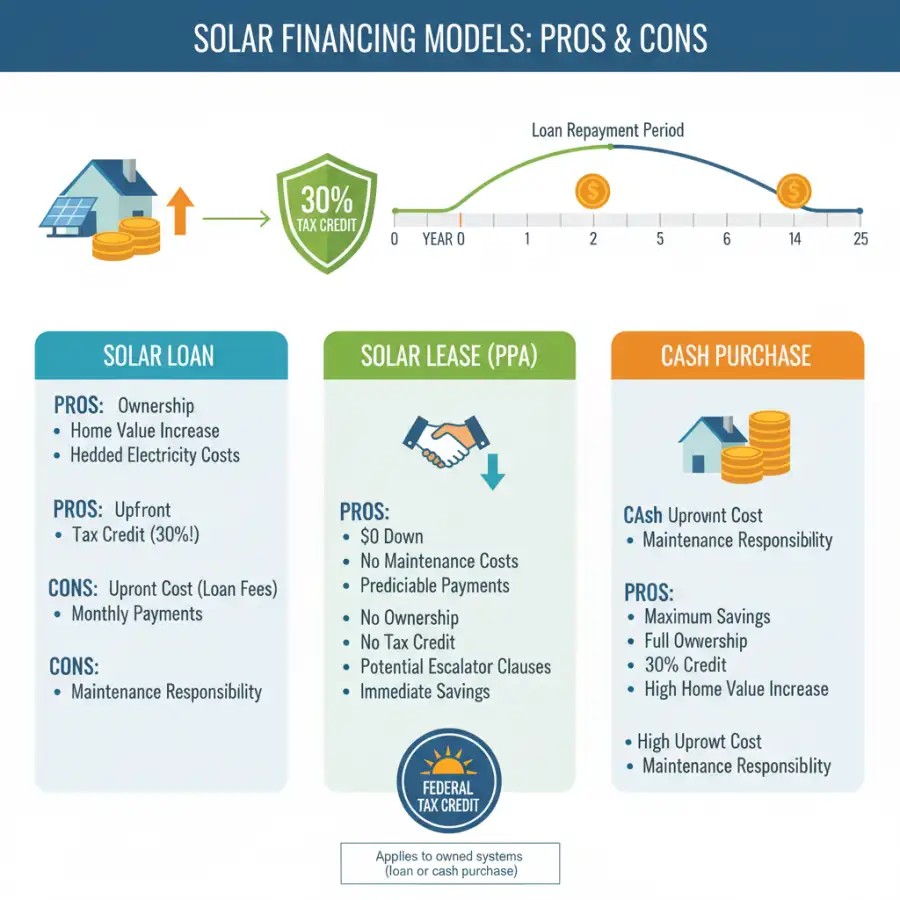
Solar financing options can affect the total cost and your long-term savings. Here is a breakdown of common financing methods. Each has possible fees and benefits. It is important to look at each one closely.
Solar Loans: Solar loans involve borrowing money to buy your solar panel system. You own the system from the start. You must repay the loan. Check the interest rates, fees, and repayment terms. Make sure the loan matches your financial goals. Think about tax credits. Evaluate the lender's reputation and customer service.
Solar Leases: With a solar lease, you pay a monthly fee to use the solar panel system. You do not own it. The leasing company owns the panels and is responsible for maintenance and repairs. Leases often have lower costs upfront. You do not get tax credits or the benefit of your home's value increasing. Carefully check the lease terms. Look for possible increases in monthly payments and any limits on selling your home.
Power Purchase Agreements (PPAs): PPAs are similar to leases. You pay for the electricity made by the solar panel system. A third-party company owns, installs, and maintains the solar panels on your property. PPAs often have lower electricity rates than regular utilities. You do not own the system. Understand the contract terms. Know the price per kilowatt-hour, any minimum usage requirements, and the length of the agreement.
Cash Purchase: Paying for your solar panel system upfront means no financing fees and interest charges. You own the system. You can get tax credits and save on energy costs. This option needs a large initial investment. Decide if it fits your budget and financial priorities.
Should you lease or buy?
Risks, trade-offs, and blind spots
Every financing option has drawbacks. Understanding the risks, trade-offs, and blind spots helps you avoid financial surprises. You can make the most of your investment in solar energy.
Loan Risks: Solar loans can be a good option if the terms are good. High interest rates can increase the total cost of the system. Prepayment penalties can be an issue if you plan to refinance or sell your home. Understand the terms, including the annual percentage rate (APR) and any hidden fees, before you agree to a loan.
Lease Trade-offs: Solar leases often have lower costs upfront but have trade-offs. You will not own the system, and you will not get tax benefits. Leases may limit your ability to sell your home or change the system. Understand all the details, including yearly payment increases.
PPA Limitations: PPAs usually have lower electricity rates than regular utilities. You are in a long-term contract with a specific provider. This may limit your ability to switch to a different supplier. You will not get the tax credits that can lower the cost of solar.
Hidden costs: In all financing options, hidden fees can be unexpected. Always look for fees. It is important to know about maintenance costs, repair costs, and charges related to the system's monitoring or performance guarantees. Not knowing these costs can lead to financial issues.
Consumer Protections and Resources
Protecting your investment means knowing your rights and the available resources. Several consumer protection measures and organizations can help you with solar financing.
The Consumer Financial Protection Bureau (CFPB): The CFPB gives information and guidance on financial products and services, including solar loans. They offer educational materials and a complaint system to help consumers with lenders. Learn the CFPB guidelines to protect yourself from bad lending practices.
State and Local Government Programs: Many states and local governments offer consumer protection programs and resources for solar energy. These programs often include educational materials, guides, and complaint services. Check your local government's website for information.
Better Business Bureau (BBB): The BBB gives ratings and reviews of businesses, including solar companies. Check the BBB ratings and read reviews to see a company's reputation and customer service. You can also file a complaint with the BBB if you have issues with a solar company.
Solar Energy Industries Association (SEIA): SEIA is a national trade group for the solar industry. They give information about solar energy. This includes guides and industry standards. Their website is a good resource for information about solar financing and consumer rights.
Legal Counsel: Think about talking to a lawyer who specializes in consumer finance or solar energy. They can look at your contracts and advise you on your rights. They can make sure your interests are protected.
Making an Informed Decision
Choosing the right financing option needs careful thought and understanding your needs. These steps can help you make a decision and avoid hidden fees:
Assess Your Energy Needs: Before you explore financing, check your energy use. Decide the size of the solar panel system you need. This assessment will affect the cost of the system and your financing options.
Compare Financing Options: Research and compare different financing options, including loans, leases, and PPAs. Get quotes from providers. Compare the terms, interest rates, fees, and benefits of each option. Consider the loan term, monthly payments, and total cost. The information in solar financing myths can help you look at your options.
Read Contracts Carefully: Carefully read all contracts. Pay attention to the details. Look for hidden fees, prepayment penalties, and other clauses that could affect your investment. Ask questions if anything is unclear.
Get Multiple Quotes: Get quotes from solar installers and financing providers. This helps you compare prices, terms, and services. You can negotiate the best deal. Make sure all quotes are detailed. They must clearly show all costs and fees.
Check References and Reviews: Research the solar installer and financing provider. Check their references and read reviews. This will help you see their reputation and customer service.
Consider the Long-Term Benefits: Look at the long-term benefits of each financing option. This includes potential energy savings, tax credits, and the impact on your home's value. Make sure the option matches your financial goals and sustainability objectives.
Seek Expert Advice: Talk to financial advisors or energy experts. They can give advice for your needs. They can help you understand solar financing and make a decision.
Main points
Here is a quick review of the most important things from this guide:
- Be Aware of Hidden Fees: Loan fees, charges, and other hidden fees can add up. Look at all costs.
- Understand Financing Options: Solar loans, leases, and PPAs have pros and cons. Evaluate them.
- Assess Risks: Weigh risks, including high interest rates in loans and restrictions in leases.
- Utilize Consumer Protections: Use resources like the CFPB and BBB to protect your investment.
- Do Your Research: Compare quotes, read contracts, and check references.
- Assess Your Needs: Evaluate your energy use and choose the right system size.
- Plan Ahead: Consider the long-term benefits.
- Seek Expert Advice: Consult with professionals.
By understanding hidden fees and researching your options, you can make a good decision about solar financing. This guide helps you find the best way to be energy independent and save money. Start with confidence. You are ready to make the most of your investment in renewable energy. For more information about residential solar financing, look at unlocking solar power.