

DIY Solar Panel Installation: Risks, Rewards, and Things to Know
A comprehensive guide to help you decide if installing solar panels yourself is right for you.
Do you want to use solar power, but worry about the costs? Installing solar panels yourself could save money and help the environment. Is it worth the risk?
This guide covers the potential savings, environmental benefits, safety issues, and legal requirements of DIY solar panel installation. It will help you make a good decision.
Consider the challenges, weigh the pros and cons, and learn if a DIY solar project suits your home and budget.
Renewable energy is appealing. Homeowners are turning to solar power because electricity costs are rising and climate change is a concern. Installing a DIY solar panel system is becoming more popular. It promises to save money. However, installing solar panels has challenges. This guide explains the risks and rewards of DIY solar panel installation. You will understand what it involves. You can then decide if it is right for you.
Quick navigation
Is DIY Solar Right for You?
Ask yourself: Are you comfortable working at heights? Do you have experience with electrical wiring? If not, think again. DIY solar installation requires skill. You must understand electrical systems. It is not a simple project.
Consider your time. Installing solar panels can take days or weeks. It depends on the system size and your experience. You must also research, plan, and fix any problems. Is your time worth more than the money you might save?
Assess your resources. Do you have the necessary tools and equipment? Do you have a safe place to store the panels and other parts? Do you have the money to cover unexpected costs? Answering these questions will help you decide if DIY solar is possible for you.
What this means for you
DIY solar installation can be a rewarding experience. You get a sense of accomplishment. You control your energy production. You will learn about renewable energy and your home's electrical system. This can help you understand how you use energy. It can show you ways to conserve more.
The risks are significant. Incorrect installation can cause electrical hazards, fire, and damage to your home. It can also void your homeowner's insurance. You may not receive tax credits or rebates. If you are not careful, the costs of a DIY project can be higher than the savings. Did you know incorrect wiring can cause major damage?
The Solar Panel Installation Process
Installing solar panels involves several steps. First, you must assess your home's solar potential. Check your roof's orientation, shading, and structure. Then, size your solar system according to your energy needs. Next, get the parts: solar panels, inverters, racking systems, and wiring.
Installation involves mounting the panels on your roof. Connect them to the inverter. Wire the inverter to your home's electrical panel. Make sure all connections are secure. They must follow local electrical codes. Finally, have your system inspected and approved by local authorities.
Safety is key. Always turn off your home's power before working on electrical components. Wear safety gear, including gloves, eye protection, and a safety harness when on your roof.
Risks, trade-offs, and blind spots
The main risk of DIY solar panel installation is electrical hazards. Incorrect wiring or bad connections can cause electric shock, fire, and home damage. You must follow electrical codes and safety rules carefully.
Another risk is roof damage. Solar panels are heavy. If your roof is not strong, the weight of the panels can make it collapse. Water leaks from incorrect installation are another concern. Are you ready for these risks?
Trade-offs include time and expertise. DIY installation takes time. You must research, plan, install, and fix any issues. You must also have the skills to handle electrical wiring and roofing work. If you lack these skills, you may spend more on tools, materials, and repairs than you would with professional installation.
A blind spot is the loss of warranties. Many solar panel manufacturers will void their warranty if a certified professional does not install the panels. Also, DIY installations may not qualify for tax credits or rebates. This can reduce the financial benefits of solar power.
Costs and Savings: DIY vs. Professional
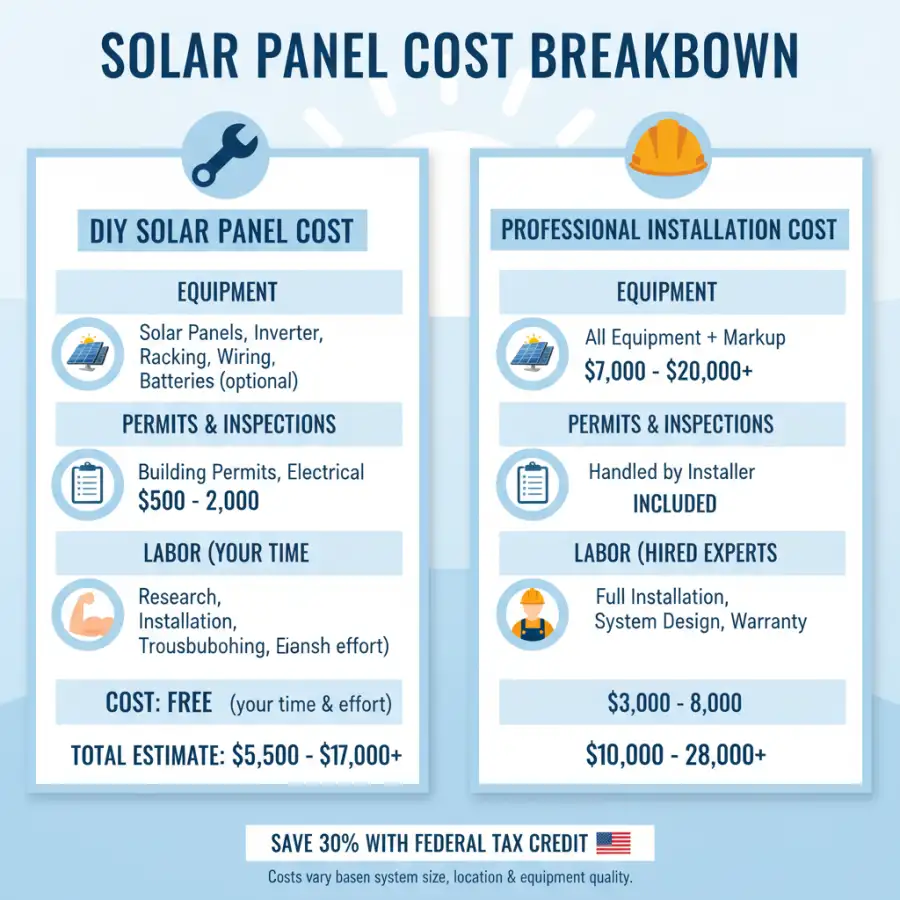
One reason to install solar panels yourself is potential cost savings. The initial cost of materials can be lower than professional installation. However, consider all costs: tools, permits, and inspections. You might also need to pay for professional help if you have problems.
Professional installations, although more expensive at first, often include warranties on equipment and workmanship. Professionals also handle permits and ensure your system follows local codes. The long-term benefits and peace of mind can be worth the extra cost. For example, a professional installation can help you get the most return on your investment.
Legal and Regulatory Considerations
Before starting your DIY solar project, you must follow local, state, and federal rules. You must get the necessary permits. This means submitting plans to your local building department. You must have the system inspected. Learn the requirements in your area to stay compliant.
You may also need to meet electrical codes, like those in the National Electrical Code (NEC). These codes cover all electrical installations, including wiring and grounding. Your system must also meet your local utility company's requirements. They may require a specific inverter or a net metering agreement.
If you do not follow these rules, you may get fines, delays, or even have to remove your system. You might also lose tax credits and rebates. It is important to research the requirements in your area. Make sure you meet them before starting your project.
Main points
- DIY solar panel installation can save money, but it has risks. These include electrical hazards and roof damage.
- Before starting a DIY project, assess your skills, time, and resources. Consider the costs of tools and potential problems.
- The solar panel installation process involves assessing your home's solar potential, getting parts, and mounting the panels. Always be safe.
- Incorrect installation can void warranties. You might not get tax credits or rebates.
- Professional installations often include warranties. They ensure compliance with local rules.
- Follow local, state, and federal rules. Get permits and meet electrical codes.
- Consider the potential for increased home value with a professional solar panel system.
- Talk to a qualified electrician or solar installer. Decide if DIY installation is right for you.
Are you now more informed about the potential risks and rewards of a DIY solar panel system? Understanding all the factors is critical before making your decision.