

Residential Solar Panels: Your Essential Guide to Powering Your Home with the Sun
Choosing the Best Panels for Efficiency, Durability, and Lasting Value
Is harnessing the sun's power for your home just an environmental choice, or a shrewd financial investment? Understanding Residential Solar Panels is the key to both.
From advanced efficiency to rugged durability, not all solar panels are created equal. Discover which systems truly offer the best long-term value for your household.
Beyond the glimmer on your roof, a smart solar investment means navigating complex choices in technology, cost, and savings. Are you equipped to make the right decision for your energy future?
The decision to install residential solar panels is a significant one, promising reduced electricity bills, a smaller carbon footprint, and increased home value. Yet, for many homeowners, the sheer volume of choices—different panel types, inverter technologies, battery storage options, and financing models—can feel overwhelming. This comprehensive guide aims to simplify the topic of 'Residential Solar Panels,' providing you with the essential knowledge to make an informed and confident investment.
We will explore the various types of solar panels available, examine the critical components that make up a complete solar energy system, break down the factors that influence overall cost, and crucially, help you determine if solar panels are a worthwhile investment for your specific home. Our focus will be on identifying the 'best' systems based on efficiency, durability, and long-term value, enabling you to harness the sun's power effectively and sustainably for decades to come.
Quick navigation
- The Foundation: Understanding Different Types of Residential Solar Panels
- Beyond the Panels: Essential Components of a Residential Solar System
- Deciphering the Cost: What to Expect for Residential Solar Panels
- What this means for you
- Risks, trade-offs, and blind spots
- Choosing the Best: Efficiency, Durability, and Warranties
- Maximizing Your Investment: Incentives and Smart Design
- Main points
The Foundation: Understanding Different Types of Residential Solar Panels
Before you commit to harnessing the sun, it's crucial to understand the fundamental technology at play: the solar panel itself. While they all perform the same basic function – converting sunlight into electricity – not all panels are created equal. For residential applications, you'll primarily encounter three main types, though one dominates the market due to its superior performance.
The most common and efficient choice today is **monocrystalline solar panels**. These panels are easily identifiable by their uniform, dark black appearance, created from a single crystal of silicon. Their key advantages include higher efficiency ratings (typically 18-23% and above), which means they generate more power per square foot, making them ideal for homes with limited roof space. They also tend to perform better in lower light conditions and hot weather compared to their polycrystalline counterparts. The trade-off? Monocrystalline panels usually come with a higher upfront cost.
**Polycrystalline solar panels** are distinguished by their blue, speckled appearance, a result of being made from multiple silicon crystal fragments melted together. While less efficient than monocrystalline panels (typically 15-18%), they are generally more affordable. This can make them a cost-effective option for homeowners with ample roof space where maximum efficiency per square foot isn't the absolute priority. Their performance can be slightly less robust in shaded or very hot conditions.
**Thin-film solar panels** (amorphous silicon, CIGS, CdTe) are far less common in residential applications due to their significantly lower efficiency (often 10-13%) and larger footprint requirement. However, they are lightweight, flexible, and can perform better in very hot, diffuse light conditions. Their primary use cases are usually large commercial projects or niche applications where flexibility or weight is paramount. For the average homeowner, monocrystalline panels represent the optimal balance of efficiency, durability, and long-term value. Does a higher efficiency always translate to the 'best' panel for your specific needs, or should other factors guide your choice?
Beyond the Panels: Essential Components of a Residential Solar System
While the panels themselves are the stars of your solar system, they are just one part of a complex, interconnected ecosystem. For 'Residential Solar Panels' to effectively power your home, several other critical components work in harmony. Understanding these elements is key to appreciating the full functionality and efficiency of your setup.
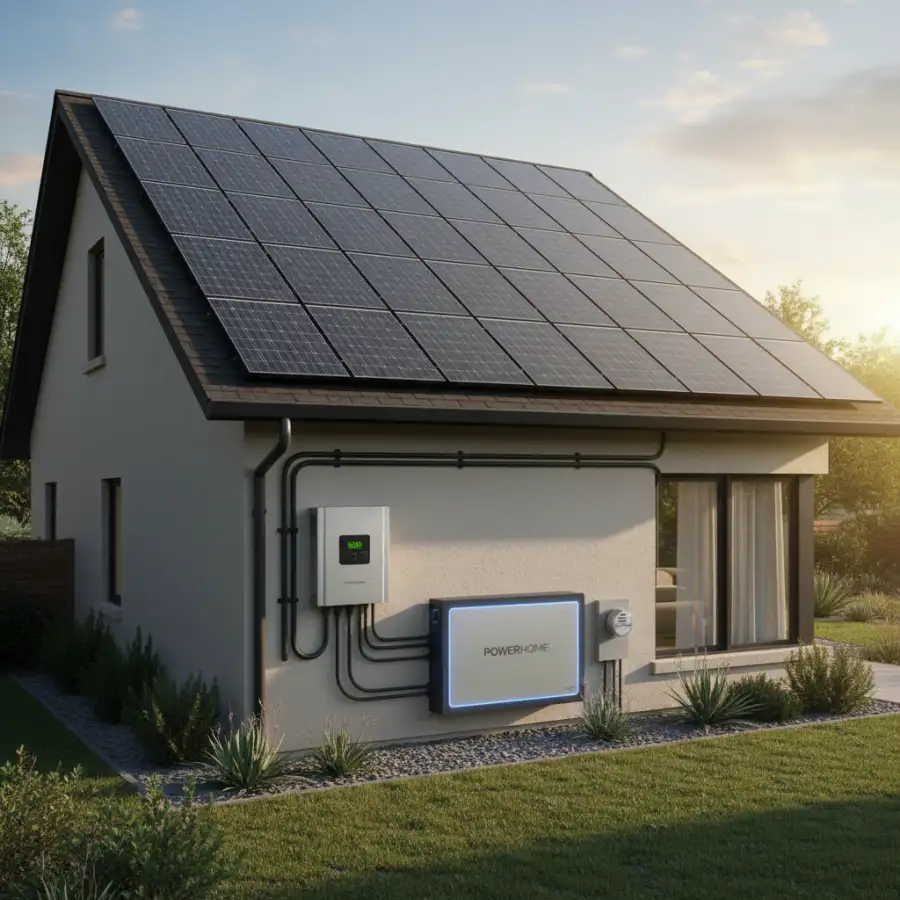
First and foremost are **inverters**, the brain of your solar system. Panels produce Direct Current (DC) electricity, but your home and the grid use Alternating Current (AC). Inverters convert DC to AC. There are three primary types: **string inverters** are a common, cost-effective choice where panels are wired in 'strings,' and the inverter processes the entire string's output. While efficient for unshaded roofs, shading on even one panel can reduce the output of the entire string. **Microinverters**, conversely, are installed under each individual panel, optimizing its output independently. This is excellent for shaded roofs or complex rooflines, as one shaded panel won't affect others. They also offer panel-level monitoring. **Hybrid inverters** combine traditional inverter functions with battery storage management, allowing seamless integration of batteries into your solar system. Choosing the right inverter technology significantly impacts your system's overall efficiency and performance under various conditions. Is a state-of-the-art panel truly optimized without the right supporting technology?
Next are the **mounting systems**, which secure your panels to your roof or ground. **Roof mounts** are the most common for residential installations, using racks attached to your roof structure. Factors like roof type (pitched vs. flat), material, and structural integrity dictate the specific mounting hardware used. For homes with unsuitable roofs or ample land, **ground mounts** offer greater flexibility in orientation and tilt, though they require more space and can be more expensive. Finally, **battery storage** is a growing trend. Lithium-ion batteries can store excess solar energy for use during grid outages or at night, enhancing energy independence and allowing you to maximize savings with time-of-use utility rates. Monitoring systems, often accessible via a smartphone app, provide real-time data on your system's performance, ensuring you're always aware of your energy production and consumption. For a comprehensive overview of how these components come together, refer to detailed guides on residential solar panel installation.
Deciphering the Cost: What to Expect for Residential Solar Panels
One of the first questions homeowners ask when considering 'Residential Solar Panels' is, inevitably, "How much does it cost?" The answer is rarely simple, as the total investment is influenced by numerous variables. Rather than a flat price, solar system costs are typically discussed in terms of dollars per watt ($/W) and total system cost, which varies widely depending on the system's size in kilowatts (kW).
The average residential solar system in the U.S. might range from 5 kW to 10 kW, with costs per watt typically falling between $2.50 and $4.00 before incentives. This means a 6 kW system could have a gross cost between $15,000 and $24,000. This figure, however, is a gross cost. Key factors that drive this price include the type and efficiency of panels you choose (monocrystalline panels are pricier than polycrystalline), your inverter choice (microinverters add to the cost but offer benefits), and whether you opt for battery storage, which can significantly increase the initial investment.
Beyond hardware, installation complexity plays a major role. Homes with challenging roof structures, older electrical systems requiring upgrades, or those needing a ground-mount system will incur higher labor and material costs. Permitting fees, utility interconnection charges, and local labor rates also contribute to the final price. It's crucial to distinguish between the gross cost and the net cost after incentives, such as the Federal Solar Investment Tax Credit (ITC) and various state or local rebates, which can reduce your out-of-pocket expenses by thousands of dollars. While it's natural to seek the most affordable option, focusing solely on the lowest price can be a mistake. Investing in higher-quality panels and a reputable installer often leads to greater efficiency, durability, and higher long-term savings, offering better overall value for an asset designed to last 25 years or more. Is the cheapest option truly the most economical choice when investing in a 25-year asset?
What this means for you
For you, the homeowner, the decision to install 'Residential Solar Panels' translates into a profound impact on both your finances and your daily life. The core question on most minds is, "Are solar panels a worthwhile investment for my home?" The answer, for a significant majority, is a resounding yes, driven by several compelling factors.
Firstly, solar panels demonstrably increase your home's value. Studies consistently show that homes with owned solar systems sell for more and spend less time on the market. This appreciation becomes a tangible asset. Secondly, and perhaps most immediately impactful, is the promise of energy independence. By generating your own electricity, you reduce your reliance on utility companies, gaining control over a fundamental household expense. This directly leads to substantial savings on electricity bills, often cutting them by 50-100% depending on your system size and consumption habits. These savings compound over the decades, protecting you from unpredictable utility rate increases.
Beyond direct bill reductions, mechanisms like net metering (where your utility credits you for excess electricity sent back to the grid) and Solar Renewable Energy Credits (SRECs) in some regions can further boost your financial returns. To assess if solar is a worthwhile investment for *your* specific home, consider your current energy usage (higher consumption generally means greater savings potential), the amount of direct sunlight your roof receives, and your budget for the initial investment. Understanding these factors will allow you to determine a realistic payback period and long-term ROI. The quality of installation and the reputation of the company you choose directly impact your ROI and overall satisfaction. For guidance on selecting a trustworthy partner, refer to insights on choosing the best solar roofing company. Beyond the environmental appeal, how will solar transform your household's financial future?
Risks, trade-offs, and blind spots
While the benefits of 'Residential Solar Panels' are clear, a balanced perspective requires acknowledging the potential downsides, inherent trade-offs, and often-overlooked blind spots. No investment is without its risks, and solar is no exception. The most immediate challenge for many homeowners is the **high upfront cost**. While financing options exist, a significant capital outlay is typically required, whether through loans or cash, which might not be feasible for everyone.
Another crucial consideration is **roof suitability**. Not every roof is a perfect candidate for solar. Factors like age, structural integrity, shading from nearby trees or buildings, and the orientation to the sun can significantly impact a system's efficiency and even dictate whether an installation is viable. **Aesthetic concerns** are also legitimate; while panels are becoming sleeker, some homeowners dislike their visual impact on a home's curb appeal. Don't fall for **maintenance misconceptions**; while solar systems require minimal upkeep, they are not entirely maintenance-free. Occasional cleaning, especially in dusty areas, and potential inverter replacements (typically every 10-15 years) are costs to factor in.
Performance variability due to **weather and shading** is a reality. Cloudy days or unexpected new construction that casts shadows on your panels will reduce energy production. Panels also experience a slight **degradation** in efficiency over their lifespan, usually around 0.5-1% annually. Furthermore, the choice of financing—whether you own the system outright, take out a loan, or enter a lease or PPA—has profound implications for your long-term value, tax incentives, and even your ability to sell your home. It's vital to fully understand the terms and responsibilities associated with each. Finally, **warranties** are critical but often misunderstood. Differentiate between product warranties (covering defects), performance warranties (guaranteeing power output over time), and labor warranties (covering installation workmanship). Are you prepared for every variable, or could unforeseen challenges diminish your solar benefits?
Choosing the Best: Efficiency, Durability, and Warranties
Identifying the 'best solar panels' for your home isn't about finding a single, universally superior product; it's about matching panel characteristics to your specific needs, budget, and environmental conditions. The key metrics to evaluate are efficiency, durability, and the comprehensiveness of their warranties.
**Efficiency** refers to how much sunlight a panel can convert into electricity. Higher efficiency panels (typically 18-23% for monocrystalline) generate more power per square foot. This is particularly crucial if you have limited roof space, as you'll maximize energy production within your available area. While a higher efficiency panel often costs more, it can lead to greater long-term savings and a smaller physical footprint on your roof. Always compare the efficiency ratings across different brands and models.
**Durability** is paramount for an investment designed to last 25-30 years. Panels must withstand local weather conditions, including strong winds, hail, heavy snow loads, and extreme temperatures. Look for panels with robust framing, high-quality glass, and certifications for harsh environments. Leading manufacturers invest heavily in rigorous testing to ensure their panels can endure decades of outdoor exposure. A durable panel minimizes the risk of damage and ensures consistent performance throughout its lifespan.
**Warranties** are your safeguard. There are typically three main types: the **product warranty** covers material and workmanship defects, often lasting 10-25 years. The **performance warranty** guarantees that the panels will produce a certain percentage of their original power output over time (e.g., 80-85% after 25 years). Finally, the **installation or labor warranty** covers the quality of the installation itself, typically provided by the installer. Always compare these warranty terms carefully, as they reflect the manufacturer's and installer's confidence in their product and service. Brands like SunPower, REC, and Qcells are generally recognized for their high efficiency, durability, and comprehensive warranties, but it’s always wise to research the latest offerings and reviews. How do you separate marketing claims from genuine long-term value when choosing your solar panels, ensuring your investment stands the test of time?
Maximizing Your Investment: Incentives and Smart Design
To truly optimize your investment in 'Residential Solar Panels,' you must utilize every available incentive and ensure your system is designed for peak performance. These two elements can significantly reduce your net cost and significantly boost your long-term savings.
The most impactful financial boost for U.S. homeowners is the **Federal Solar Investment Tax Credit (ITC)**. This credit allows you to deduct 30% of the cost of your solar energy system from your federal income taxes. It's a direct dollar-for-dollar reduction in your tax liability, not merely a deduction, making it incredibly powerful. Understanding your eligibility and how to claim it (typically via IRS Form 5695) is essential for maximizing your return. Beyond federal support, a diverse array of **state and local incentives** can further sweeten the deal. These include state tax credits, direct cash rebates upon installation, property tax exemptions (preventing your property taxes from increasing due to the added value of solar), and sales tax exemptions on solar equipment. Many states also offer favorable **net metering policies**, where your utility credits you for any excess electricity your panels send back to the grid, often at the full retail rate, further reducing your energy bills.
Smart system design is equally critical. **System sizing** must be precisely tailored to your household's energy needs. An undersized system won't offset enough of your electricity bill, while an oversized system can be an unnecessary expense, potentially generating more power than your utility's net metering policy fully compensates for. Work with your installer to analyze your past electricity bills and project future consumption. Furthermore, **optimizing panel placement and tilt** is crucial for maximum sunlight exposure throughout the year. Even small adjustments in angle and orientation can significantly impact your annual energy production. Are you fully utilizing every available financial advantage to maximize your solar ROI?
Main points
- Monocrystalline panels offer high efficiency, ideal for limited roof space, while polycrystalline panels are more budget-friendly.
- A complete solar system includes panels, inverters (string, micro, or hybrid), mounting systems, and optionally, battery storage and monitoring.
- Costs vary by system size, panel type, and installation complexity, with gross costs significantly reduced by incentives.
- Solar panels are a worthwhile investment, increasing home value, providing energy independence, and generating substantial long-term savings.
- Key risks include high upfront costs, roof suitability, aesthetic concerns, and variable performance due to weather or shading.
- Choosing the 'best' panels involves evaluating efficiency, durability, and comprehensive warranties (product, performance, labor).
- Maximizing your investment relies on federal (ITC), state, and local incentives, coupled with smart system sizing and optimized panel placement.
Investing in residential solar panels is a powerful step towards a sustainable and financially secure future for your home. By understanding these critical factors—from panel types to incentives and smart design—you can make a confident, informed decision. We encourage you to seek multiple quotes, ask detailed questions, and ensure your chosen system perfectly aligns with your energy goals and long-term aspirations for a successful residential solar panel installation.